

Education
The Department of Human Geography houses two disciplines, Human Geography and Human Ecology. The latter is organized as a division within the Department. Research and education in human geography address social, cultural, political and economic processes of change and their spatial expressions and consequences for people at different scales, whether local, regional or global. The key areas of research and teaching at the department are cultural geography, urban and social geography, economic geography, development geography and GIS.
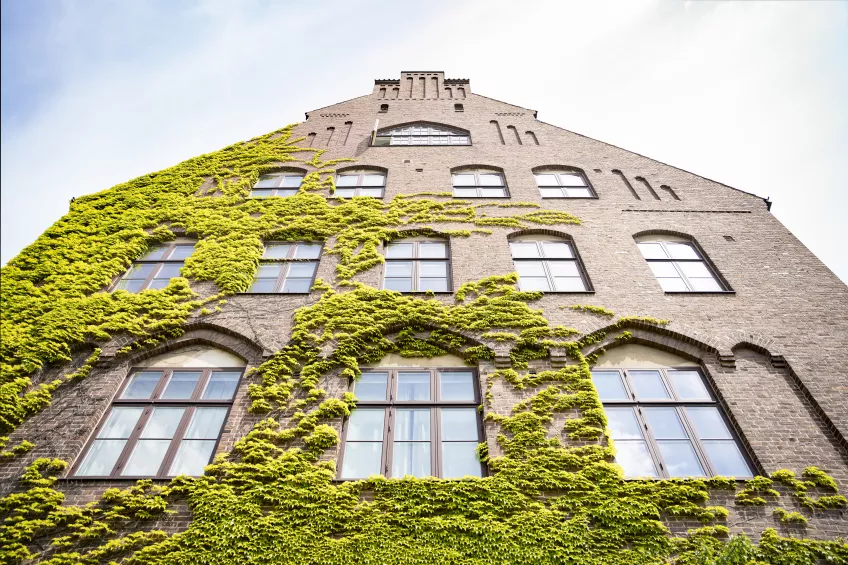
Human Geography
Study Human Geography and boost your abilities to understand, analyze and interpret the world around us.
Urban spaces, landscapes and regions
Human Geography is about the ways in which spaces, places and environments are both the condition for and the consequence of human activities.Within human geography you study human interactions with their surrounding world. The subject has a focus on how people organize and make use of the earth's surface and its resources.
Particular emphasis is on people's economic, social and cultural activities and processes as well as on the relationship to places and geographical areas: from urban spaces to landscapes, regions and countries. Human geography covers many topics and can be combined with other university disciplines.
As human geographers, we take a broad view of human activities as cultural, economic, social and political, and we approach topics from distinctly geographical perspectives. Human geographers add sensitivity to space and place to social, political and economic enquiry, and we frequently draw on elements from the natural sciences and the humanities.
Career prospects
Human Geography gives you a basis for several possible careers like urban planner, educator, scientist, analyst, environmental strategist, or manager in the private and public sectors.
We offer:
- Freestanding courses in Human Geography
- Major of Human Geography within our Bachelor's Programmes
- Master's Programme in Human Geography
- PhD education in Human Geography
Human Ecology
Human Ecology is the study of the interactions between man and nature in different cultures. Human Ecology combines the ideas and methods from several disciplines, including anthropology, sociology, biology, economic history and archaeology. Our multidisciplinary approach enables us to comprehensively address issues of environmental justice, sustainability and political ecology.
Human activity in different ecosystems
Human Ecology studies human life and human activity in different ecosystems and different cultures in the present and in the past in order to gain a better understanding of the factors which influence the interaction between humans and their environment.
The ambition to achieve a more complete view requires an integrated perspective that transcends traditional boundaries between the humanities, social sciences, natural sciences, and technology.
A fundamental issue in human ecology is how people's cultural beliefs about the nature affect and are affected by their livelihoods and the social order.
An anthropological perspective
While cultural beliefs come into focus in the influential modern sciences like economics, human ecologists examine the modern concepts of economic growth and technological development from an anthropological perspective. By comparing those concepts with other scientifical insights about environmental degradation, climate change and global inequality, human ecology challenges the ideas that perpetuate an unsustainable and unequal global society.
Studies in Human Ecology give you a broad and theoretically deep understanding of the interactions between man and nature in different times and in different parts of the world. Of central importance is to understand how human relationships with the environment are influenced by their history and their place in the world system.
Career prospects
Human ecology is an ideal subject for you if you want to make a career with broad opportunities in educational, environmental or humanitarian work. The capacity to communicate and negotiate issues of global sustainability will be increasingly important for a wide range of professions, including careers in education, journalism, public and private management, development aid, and non-governmental organizations devoted to achieving a globally sustainable development. In these sectors, trans-disciplinary approaches combining perspectives from both the natural and the social sciences can be expected to be increasingly in demand.
We offer:
- Freestanding courses in Human Ecology
- Master's Programme in Human Ecology
- PhD education in Human Ecology
Development Studies
Development Studies is an interdisciplinary field that gathers knowledge and research forces from several social sciences disciplines.
Understanding development
Development studies apply multi-disciplinary perspective to convey and deepen the knowledge of conditions and development processes in developing countries. This subject can be combined with other social sciences disciplines to widen the focus on development issues in global perspective.
Career prospects
Students taking developmental studies get a basis for various professional opportunities. A particular specialisation is the work in international organizations and aid agencies for global cooperation, information management and education activities.
We offer:
- Freestanding courses in Development Studies
- Bachelor's Programme in Development Studies
- Master's Programme in International Development and Management
GIS
GIS- Geographical information systems in education provides you an expert skill and a competitive advantage on the job market. As an academic subject, GIS can be easily combined with other disciplines.
Analyzing geographic problems
While studying GIS students learn to analyze geographic problems, which can be put into practice and visualized through maps, text and graphics on the web and in print references. GIS can be used as a scientific method, as well as the support and practical application of a theory.
Career prospects
Students who took GIS as a part of their education have found jobs as urban planners, consultants, GIS analysts, researchers, educators, police and defense forces, or manager in the private and public sectors.
We offer:
- Freestanding courses in GIS
- GIS-courses as a part of our Bachelor's programmes
- GIS-courses as a part of our Master's programmes
NB! We specialize in GIS for social scientists. If you are interested in GIS for physical geographers, please contact the Department of Physical Geography and Ecosystem Science.
Study Advising
We help you with problems and questions related to your studies at the department. You are welcome to contact us if you have questions about your studies at our department.
Student Services
Lund University offers a range of services to facilitate day-to-day life for its international students.
Student Office
Contact details
Email: expeditionen [at] keg [dot] lu [dot] se (expeditionen[at]keg[dot]lu[dot]se)
Phone: 046 222 17 59
Opening hours
Tuesdays 13.00-15.00
Wednesdays 09.00-12.00